Shared tasks and participation
Focusing joint attention onto manual materials creates a distinct social configuration known as parallel engagement. This document examines tactile practices where collective manipulation of physical objects reduces interpersonal friction.
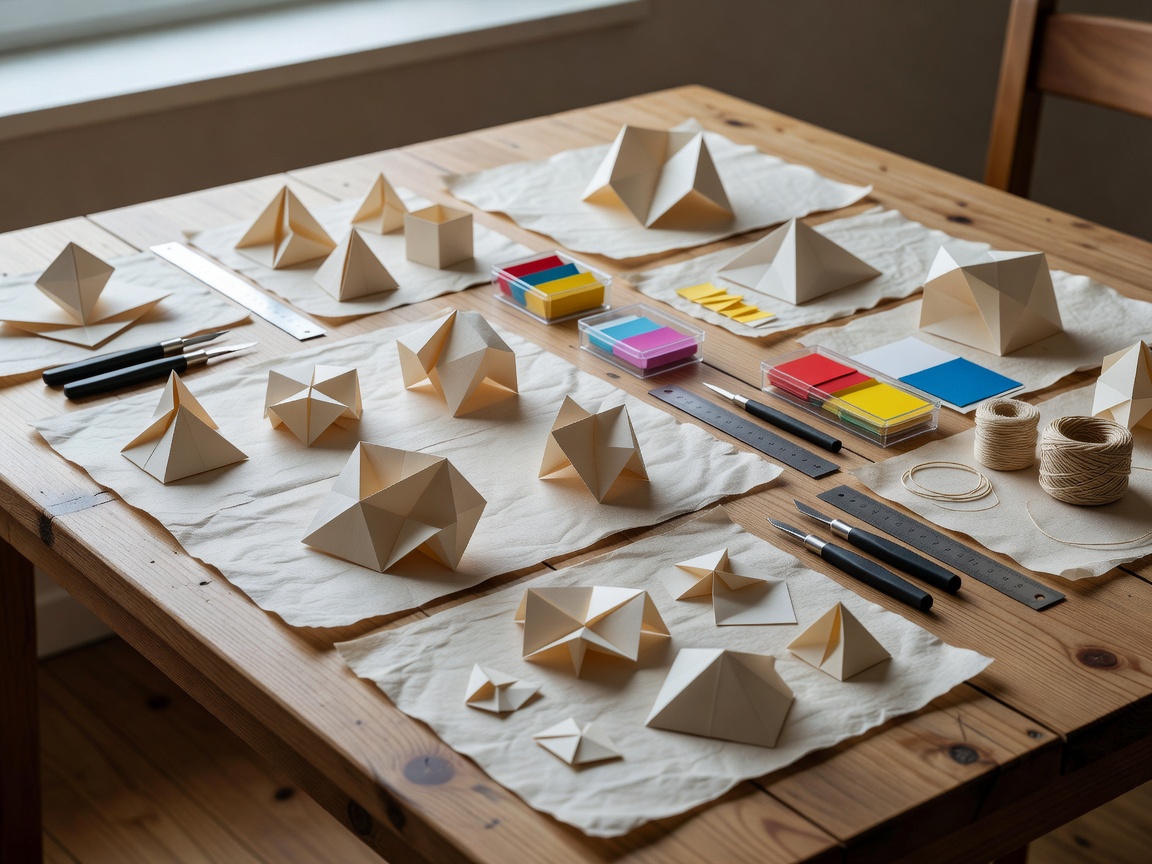
The mechanism of parallel engagement
Parallel engagement is defined as a social state in which individuals occupy proximity and pursue a shared or simultaneous activity without requiring continuous verbal negotiation or reciprocal eye contact. In psychological observation, shared physical tasks divert neurological attention from social monitoring toward fine-motor execution and visual processing.
This redirection substantially decreases baseline physiological arousal in individuals who experience social anxiety. However, the efficacy of manual tasks is constrained by spatial parameters: insufficient workspace, inadequate lighting, or excessive material clutter can generate physical frustration that overrides the intended social equilibrium.
Tangible examples of collaborative activities
Several enduring manual traditions support group coordination without necessitating competitive friction:
- Tangrams: Originating during the Song dynasty in China and popularised internationally during the early nineteenth century, tangrams require the geometric arrangement of seven flat polygonal shapes (tans) to match silhouette outlines. Within small groups, solving tangram configurations permits cooperative spatial deliberation without personal performance stakes.
- Modular Origami: Distinct from single-sheet origami, modular origami involves folding identical paper units (sonobe units) that are subsequently interlocked to form complex polyhedral geometries. This process divides labour naturally, allowing individual participants to fold components independently before assembling the composite structure collectively.
- Dissected Jigsaw Puzzles: Codified in England around 1760 by John Spilsbury as educational map puzzles, jigsaw assemblies allow multiple participants to search for edge borders or colour gradients simultaneously. The non-linear nature of the puzzle allows individuals to join or leave the table at will without disrupting the social fabric.
Execution parameters for manual gatherings
The structured checklist below establishes baseline criteria for preparing a table-centred collaborative task session.
- Surface Space Allocation: Ensure a minimum of 0.8 square metres of unobstructed table space per participant to avoid physical crowding during assembly.
- Material Pre-Sorting: Divide modular components into separate containers or trays before attendees arrive, eliminating prolonged preliminary organisation.
- Ambient Acoustic Calibration: Maintain background sound levels below 55 decibels, avoiding lyrical music that competes with occasional procedural commentary.
- Explicit Opt-Out Protocol: State clearly at the outset that participants are welcome to observe without handling materials, preserving low-pressure engagement.
Limits of manual collaboration
It must be acknowledged that manual activities do not suit all participants. Individuals with motor impairments or visual fatigue may find detailed tactile tasks physically taxing rather than restorative. Additionally, if the selected task is excessively complex, the gathering can devolve into private frustration rather than shared camaraderie. Organisers should therefore choose tasks requiring minimal dexterity thresholds.